 Image 1 of 3
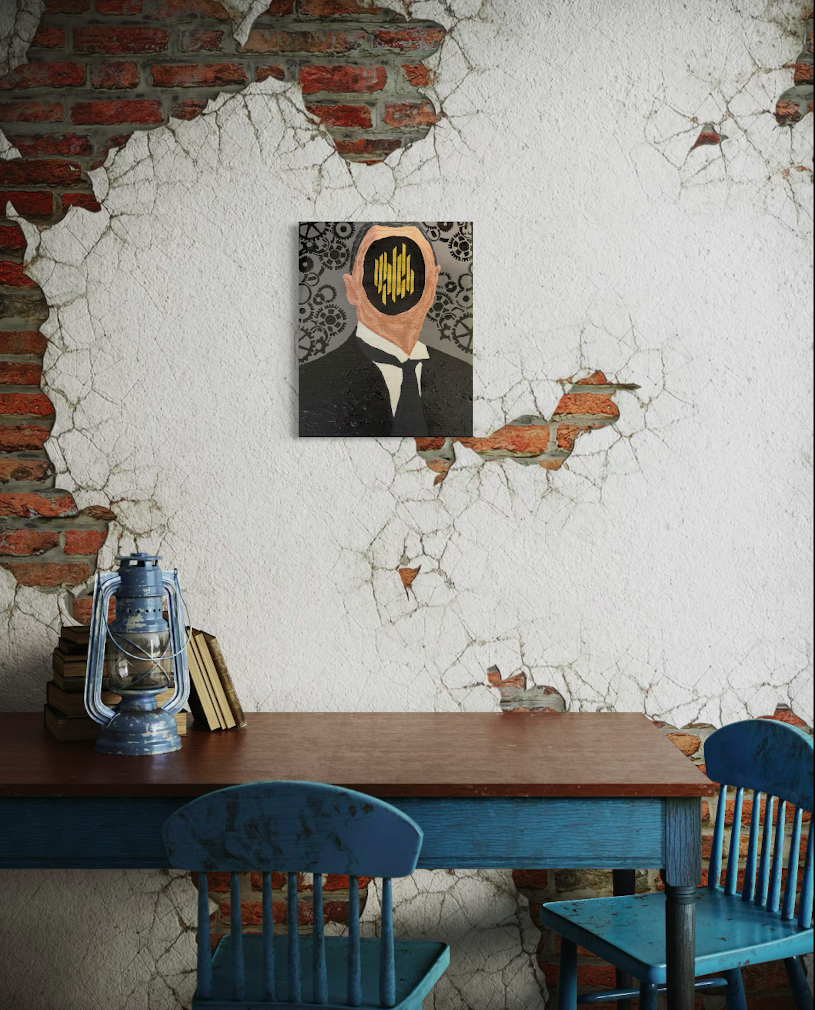 Image 2 of 3
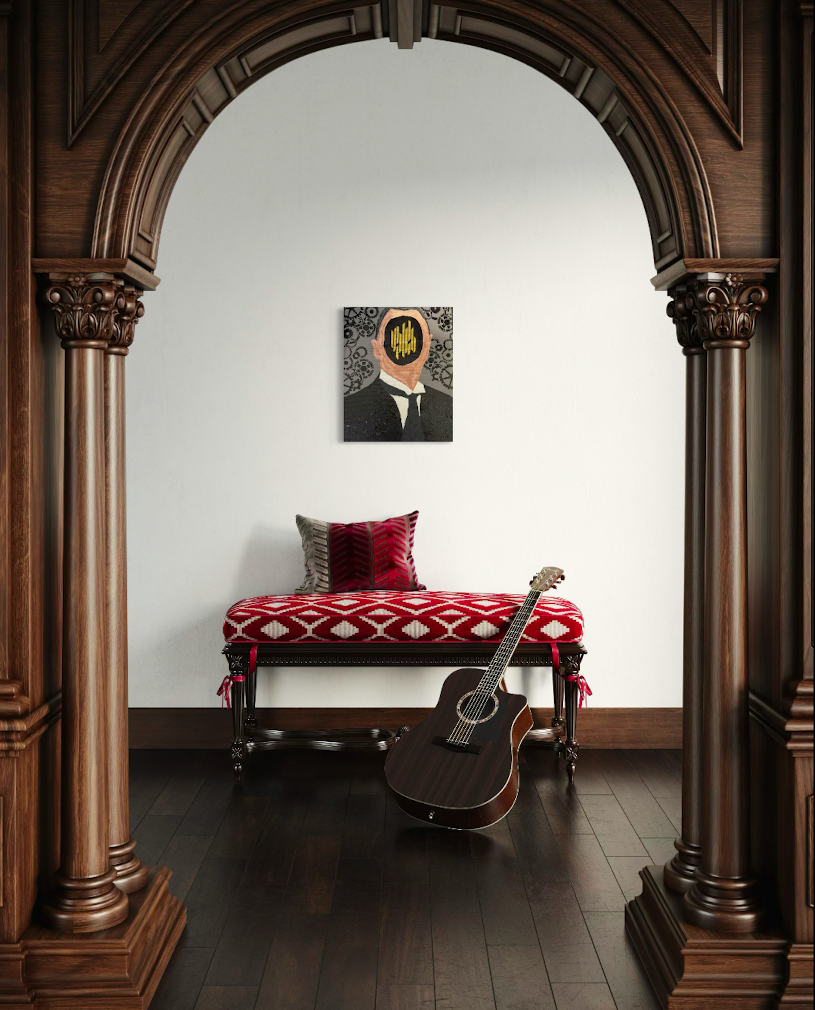 Image 3 of 3
Acrylic on canvas 39 x 49cm
This painting is ready to hang or can be rolled for easy travel
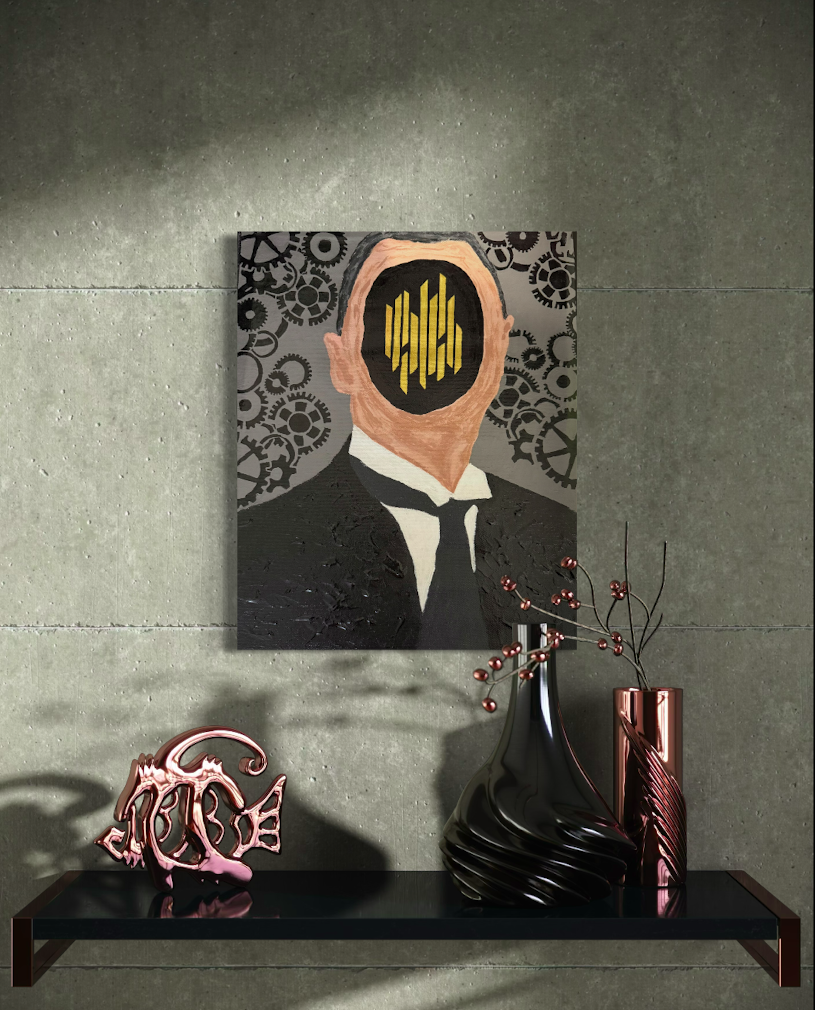
The Faceless man.
This painting is about what happens when people become trapped inside systems that were never built to see them as human.
The man is dressed in a suit, representing authority, power and institutions. But his face has disappeared. In its place are prison bars, suggesting that the system has taken over his identity. He is no longer an individual. He has become part of the machine.
The gears surrounding him represent the systems constantly turning around us: prisons, courts, government, bureaucracy and other structures of control. Each cog relies on another to keep moving, making it difficult to question who is responsible when the system causes harm.
The gold bars inside the darkness represent both confinement and value. They ask us to think about who benefits from incarceration, while the people caught within it lose their freedom, identity and voice.
The Faceless man challenges the idea that systems are neutral. Behind every policy, decision and locked door are human beings. When people stop questioning the machine and simply become another cog within it, humanity can easily disappear.
Acrylic on canvas 39 x 49cm
This painting is ready to hang or can be rolled for easy travel
The Faceless man.
This painting is about what happens when people become trapped inside systems that were never built to see them as human.
The man is dressed in a suit, representing authority, power and institutions. But his face has disappeared. In its place are prison bars, suggesting that the system has taken over his identity. He is no longer an individual. He has become part of the machine.
The gears surrounding him represent the systems constantly turning around us: prisons, courts, government, bureaucracy and other structures of control. Each cog relies on another to keep moving, making it difficult to question who is responsible when the system causes harm.
The gold bars inside the darkness represent both confinement and value. They ask us to think about who benefits from incarceration, while the people caught within it lose their freedom, identity and voice.
The Faceless man challenges the idea that systems are neutral. Behind every policy, decision and locked door are human beings. When people stop questioning the machine and simply become another cog within it, humanity can easily disappear.